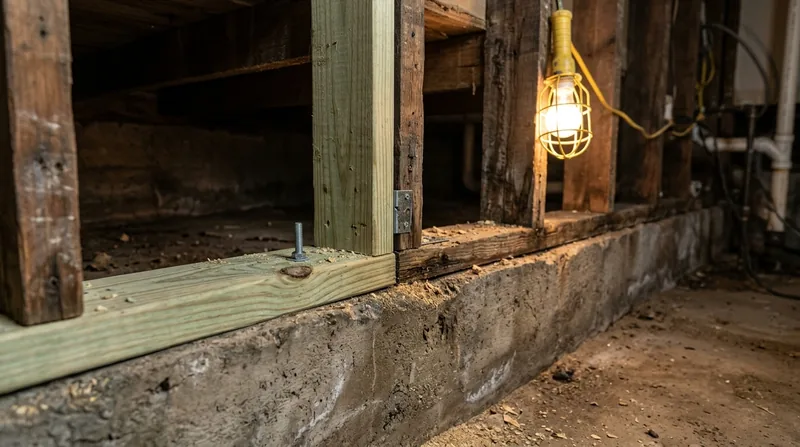




Subterranean termites are a real concern along the northern Front Range, and Fort Collins homeowners who find them during a pest inspection face a clear next step: replace the damaged wood. Unlike wood rot, which spreads slowly through years of moisture exposure, termite damage repair means addressing wood that insects have already hollowed out, and that hollow wood cannot carry a load anymore. We remove and replace termite-eaten studs, sills, floor joists, subfloor sections and trim, working directly from your pest inspection report to restore full structural integrity. The work is straightforward carpentry, but it must be done right: a sill plate that touches soil needs to be sistered or replaced before termites return, and a floor joist that has lost half its depth needs to come out completely. Fort Collins sits where the plains meet the foothills at 5,000 feet, and the semi-arid climate, intense sun and freeze-thaw cycles create the real wood-eating pressure here. Termites are a secondary concern, but when they show up, the repair is non-negotiable.
Why Termite Damage Repair Matters in Fort Collins Basements and Crawl Spaces
Termites follow moisture and wood-to-soil contact. In Fort Collins, that means basements and crawl spaces where moisture wicks up from the clay soil, and rim joists or sill plates that sit close to grade. A pest inspection that finds subterranean termites is not a death sentence for the house, but it is a clear signal that the damaged wood must come out and be replaced with new material. The repair protects the home's structural frame and stops the cycle that allowed the infestation to take hold in the first place.
- We remove termite-damaged studs, sill plates and rim joists, working from your pest inspection report to identify exactly which wood is affected.
- We replace floor joists and subfloor sections that have lost structural capacity, using pressure-treated lumber for any wood that will be close to soil or a damp basement wall.
- We sister or replace damaged trim, fascia and exterior sill boards, restoring the weathertight envelope and eliminating future termite entry points.
- We work closely with your pest control contractor to ensure the repair addresses the damage they identified, without overlapping or duplicating treatments.
The goal is a wood frame that is sound, load-bearing and protected from future moisture and pest entry.
Key info: Fort Collins' expansive clay soils and freeze-thaw cycles create damp basements and crawl spaces where termites thrive. A single pest inspection report is your roadmap for repair. We do not perform termite treatment or extermination, that is your pest control contractor's role. We handle the carpentry: removing and replacing every piece of wood the inspection identified.
For permit and inspection questions specific to Fort Collins, contact the City of Fort Collins Building and Safety Services. Structural repairs often require a permit, and the city can advise on thresholds and requirements for your specific job.
How We Replace Termite-Damaged Wood: Step by Step in Fort Collins
Termite damage repair is methodical carpentry. We start with your pest inspection report, which identifies the infested wood. We then remove the damaged sections, take measurements, and install new pressure-treated or solid wood framing that meets code. For sill plates and rim joists, we use pressure-treated lumber because that wood is close to soil and moisture. For studs and joists deeper in the frame, we match the original species and grade when possible to maintain the home's structural character, especially in Fort Collins' older Victorians and Craftsman bungalows in Old Town and the Laurel School area.
- We inspect the full extent of the damage and verify it matches the pest report, photographing the affected wood before removal.
- We remove termite-eaten studs, joists and sill plates, being careful not to disturb the structural integrity of the surrounding frame during extraction.
- We cut and fit new framing lumber, sistering joists where full replacement is not necessary, or removing and replacing entirely where the wood has lost too much depth.
- We install new pressure-treated sill plates and rim joists, fastening them securely to the foundation and band board to prevent future pest entry.
- We restore trim, casing and fascia that was damaged, matching existing profiles and finishes where the home's exterior appearance requires it.
- We coordinate with your pest control contractor so that the repair and any follow-up treatment happen in the right order, without conflicts.
The result is a wood frame that is sound, code-compliant and ready for decades of service. For related structural repairs, see our page on floor joist and subfloor repair.
Example: A 1950s brick ranch in the Sheely area near Colorado State University has a basement rim joist that termites have damaged over two seasons. The inspection report flags a 4-foot section. We remove that section, sister a new pressure-treated rim joist to the existing band board, and nail it securely. The repair takes one day, and the homeowner gets a structural guarantee and a clear record of the work for future reference or insurance documentation.
Methods and Materials for Termite Damage Repair
| Approach | Description | Best for |
|---|---|---|
| Full joist replacement | Remove the damaged joist entirely and install a new pressure-treated or solid wood joist, fastened to the band board and rim joist with structural fasteners. | Floor joists or rim joists that have lost more than 25% of their cross-section, or where the damage is concentrated in the bearing area. |
| Sistering damaged joists | Install a new joist alongside the damaged one, fastened with bolts and nails to share the load and restore structural capacity without full removal. | Joists with localized damage in the middle span, where the bearing ends are still sound and the joist can be reinforced rather than replaced. |
| Sill plate and rim joist repair | Remove the damaged sill plate or rim joist section and install new pressure-treated lumber, fastened to the foundation and band board to prevent future termite and moisture entry. | Any sill plate or rim joist in contact with soil or a damp basement wall, especially where the inspection found termite galleries or soft wood. |
| Stud and framing replacement | Remove termite-eaten wall studs and install new studs, matching the original species and grade where the home's character or finish appearance requires it. | Exterior or interior studs that have lost load-bearing capacity, or where the damage is visible and the finish needs to match the existing frame. |
| Subfloor and rim repair | Remove damaged subfloor sections and rim joists, install new pressure-treated plywood or solid lumber, and restore the structural platform for flooring and finish. | Basements and crawl spaces where the subfloor or rim has been compromised by termites or moisture, and the floor above needs full support restored. |
Termite Damage Repair Cost in Fort Collins: What to Expect
Termite damage repair costs depend on how much wood needs to come out and how accessible it is. A single rim joist section in a basement might start at $1,200 to $1,800, while a full floor joist replacement or multiple studs in a wall can run $2,500 to $4,500 or more. The main factors that move the price are the number of joists or studs affected, whether the wood is pressure-treated (which costs more but lasts longer in damp conditions), and how accessible the damage is. A basement rim joist is straightforward to reach. A joist buried under a finished floor or blocked by plumbing requires more work.
We recommend getting 2 to 3 estimates from local carpenters so you can compare scope, materials and timeline. Some contractors will try to replace everything. We assess the damage carefully and propose repair before replacement, but when the wood is too far gone, we tell you that plainly. For a detailed look at pricing across all our services, visit our full pricing page.
Travel within Fort Collins and the surrounding areas is included in our estimate. We respond to estimate requests within 24 hours at (970) 818-5680, and there is no obligation to book.
Termite Damage Repair Near Me: What Fort Collins Homeowners Should Know When Hiring
When you call a carpenter for termite damage repair, you are hiring someone to restore the structural integrity of your home. That means the person doing the work should be fully insured, should provide references, and should be willing to explain exactly what wood is being replaced and why. Ask for a site visit before the estimate, because termite damage can hide behind walls and under floors, and a good carpenter will not give you a price over the phone. Check references from other Fort Collins homeowners, especially those who had structural repairs done. If the repair requires a permit (which it often does for load-bearing walls or floor systems), your carpenter should be clear about the permit process and who pulls it. If your home is in a historic district like Old Town Fort Collins or the Laurel School area, check with the city's historic preservation office before work begins, because some repairs may need approval.
- Verify that your contractor carries liability and property damage insurance, and ask for a certificate of insurance before work starts.
- Get at least two detailed estimates that break down the wood to be removed, the materials to be used, and the timeline for completion.
- Ask for references from previous termite damage repairs or structural work in Fort Collins, and call at least one to confirm the quality and reliability.
- Understand whether a permit is required for your specific repair, and confirm that your contractor will handle the permit application or help you file it with the City of Fort Collins.
- If your home is in a historic district or HOA, verify any approval requirements before the work begins so there are no surprises mid-project.
A good carpenter will walk you through the damage, show you what is being replaced and why, and give you a clear timeline and price. For a free estimate on your termite damage repair, contact us here or call (970) 818-5680.
Termite Damage Repair in Fort Collins: Pricing Guide
| Service | Price | Details |
|---|---|---|
| Single rim joist or sill plate section | Starting at $1,200 | Removal and replacement of one damaged section in a basement or crawl space, pressure-treated material and fasteners included |
| Floor joist replacement (single joist) | Starting at $1,800 | Full removal and replacement of one damaged floor joist with pressure-treated lumber, fastened to band board and rim joist |
| Multiple joists, studs or subfloor sections | Starting at $2,500 | Removal and replacement of two or more damaged structural members, including pressure-treated material, sistering where appropriate, and finish restoration |
| Complex or large-scale termite damage repair | On estimate | Jobs affecting multiple floor systems, basement walls with extensive damage, or repairs requiring structural engineer input require site assessment |
| Travel | Included | No separate call-out or mileage fee for Fort Collins and surrounding service areas |
| Estimate | Free | Response within 24 hours at (970) 818-5680, includes site visit and detailed scope, no obligation to book |
Indicative pricing, the exact cost depends on square footage, finish, and site access. Free personalized estimate within 24h at (970) 818-5680.


