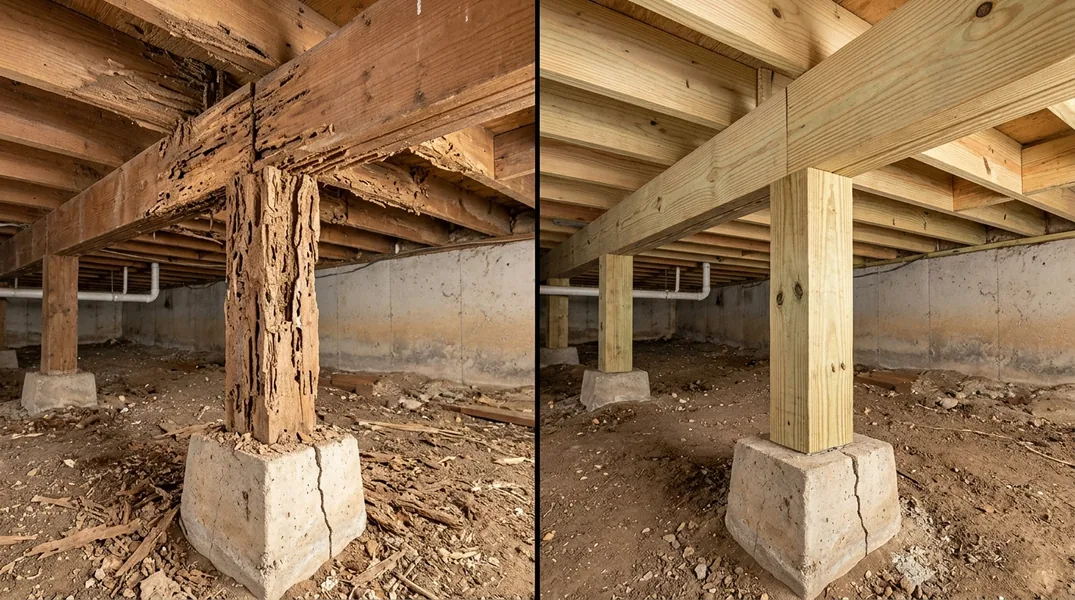
Understanding Dry Rot vs Termite Damage
If you own a home in Fort Collins, the thought of wood-destroying pests or fungal decay eating away at your foundation, beams, or flooring is enough to keep any homeowner up at night. The challenge is that dry rot and termite damage can look deceptively similar to the untrained eye, yet they require completely different repair approaches. Understanding the distinction between these two problems is the first step toward protecting your home and your wallet.
Dry rot is caused by a fungus that thrives in damp, poorly ventilated environments. It breaks down the cellulose in wood, leaving it brittle, crumbly, and structurally compromised. Termites, on the other hand, are insects that actively consume wood as a food source, creating galleries and tunnels as they work their way through the material. Both can cause serious structural damage if left untreated, but the solutions differ significantly. Knowing which problem you're facing will help you take the right action and avoid costly mistakes.
What Does Wood Rot Look Like: Visual Signs to Watch For
When examining wood for rot, look for discoloration first. Dry rot typically appears as a darkened, often blackish or grayish stain on the wood surface. The affected wood becomes soft and spongy to the touch, and it may feel damp even if the area isn't actively wet. As the decay progresses, the wood shrinks and develops deep cracks that form a distinctive cube-like pattern, which is why dry rot is sometimes called 'cubical rot.' You might also notice a musty, earthy odor near affected areas, which is the smell of active fungal growth.
The texture of rotted wood is perhaps the most telling sign. If you press a screwdriver or awl into the wood and it sinks in easily, leaving a soft impression, that's a strong indicator of decay. Dry rot can spread rapidly through a home because the fungus doesn't require the wood to be actively wet to survive, only that humidity levels remain elevated. In Fort Collins, basements, crawl spaces, and areas around plumbing fixtures are common trouble spots. If you suspect dry rot in your home, getting a professional assessment through Wood Rot & Dry Rot Repair services is essential to prevent further damage.
Termites in Colorado: Identifying Termite Damage Patterns
Fort Collins homeowners often assume termites are only a problem in warmer climates, but that's a dangerous misconception. Termites in Colorado do exist and can cause significant damage, particularly in homes with wood-to-soil contact or inadequate ventilation. While Colorado's dry climate makes termite infestations less common than in humid regions, they still occur and can go undetected for years before causing noticeable damage.
Termite damage looks distinctly different from dry rot. Termites create hollow galleries and tunnels within the wood, often following the grain. The wood may appear intact on the surface, but inside it's been hollowed out like a honeycomb. This is why termite damage can be so deceptive: a wall or beam might look fine externally while being structurally compromised internally. You might notice mud tubes running along foundation walls or wooden supports, which termites use as protected pathways. Additionally, termite damage doesn't typically produce the soft, crumbly texture of dry rot. Instead, the wood remains relatively hard but loses its structural integrity due to the extensive tunneling.
Other signs of active termite infestation include discarded wings near windows or doors, small holes in wood surfaces, and a hollow sound when you tap on wooden beams or studs. If you suspect termite damage in your home, professional Termite Damage Repair is crucial. A trained carpenter can assess the extent of the damage and recommend appropriate solutions.
Key Differences: Moisture, Spread, and Structural Impact
One of the most important distinctions between dry rot and termite damage is how moisture plays a role. Dry rot requires moisture to thrive, so it typically appears in areas with water damage, poor drainage, or high humidity. Termites, while they do prefer some moisture, can survive in drier conditions and don't depend on active wetness the way dry rot does. This means that even in Fort Collins, where the climate is relatively arid, termites can establish themselves if conditions allow.
The speed and pattern of spread also differ significantly. Dry rot spreads through fungal spores carried by air and water, and it can advance relatively quickly once conditions are right. Termites, by contrast, spread methodically as the colony grows and forages for food. Termite damage often follows a more predictable pattern along wood grain and structural members, while dry rot can spread more randomly depending on moisture levels and air circulation.
From a structural standpoint, both pose serious risks, but in different ways. Dry rot weakens wood by destroying its cellular structure, making it crumbly and brittle. This often requires replacement of affected members, particularly in critical areas like Floor Joist & Subfloor Repair or load-bearing components. Termite damage creates voids and galleries that compromise strength without necessarily making the wood appear obviously damaged. In some cases, a beam or joist can look acceptable but be on the verge of failure due to internal termite damage. Both conditions demand professional evaluation and repair.
When to Call a Professional: Wood Rot and Termite Damage Repair Near Me
If you've identified signs of either dry rot or termite damage in your home, don't delay in seeking professional help. While small surface-level issues might seem manageable, both problems tend to worsen over time and can compromise your home's structural integrity. A qualified carpenter can not only identify which problem you're facing but also assess the full scope of damage, much of which may not be visible to the naked eye.
Fort Collins Carpentry specializes in diagnosing and repairing both dry rot and termite damage. Our team understands the unique challenges that Colorado homes face, from seasonal moisture fluctuations to pest pressures. Whether your damage is limited to a small section or involves major structural components like beams or floor joists, we have the expertise to recommend the most cost-effective and durable repair solutions. Contact Fort Collins Carpentry at (970) 818-5680 or request a free estimate to have your home evaluated by a professional.
Prevention and Long-Term Protection for Fort Collins Homes
The best way to protect your home from both dry rot and termite damage is through prevention. For dry rot, focus on moisture control. Ensure gutters and downspouts direct water away from your foundation, fix any plumbing leaks promptly, and maintain good ventilation in basements and crawl spaces. Vapor barriers, proper grading around your home, and regular inspections of vulnerable areas can all help prevent the conditions that allow fungal decay to take hold.
Termite prevention involves reducing wood-to-soil contact, maintaining a barrier of clear space around your home's foundation, and keeping mulch and landscaping debris away from wooden structures. Regular inspections, particularly in spring and fall, can catch early signs of infestation before extensive damage occurs. If you've had previous issues with either problem, annual professional inspections are a worthwhile investment.
Should you discover damage, addressing it immediately prevents exponential costs down the road. What starts as a small patch of dry rot in a crawl space can eventually compromise floor joists and subfloors. Similarly, a small termite colony can grow into a major infestation within a few years. Fort Collins Carpentry recommends scheduling a professional evaluation if you notice any suspicious signs. Our team can provide guidance on both repair and prevention strategies tailored to your specific situation. Call us today at (970) 818-5680 to discuss your concerns and learn how we can help protect your home.
Looking for a professional carpentry contractor in Fort Collins? Fort Collins Carpentry responds fast for all your carpentry needs.
Get a Free QuoteOur services: Wood Rot & Dry Rot Repair · Termite Damage Repair · Floor Joist & Subfloor Repair