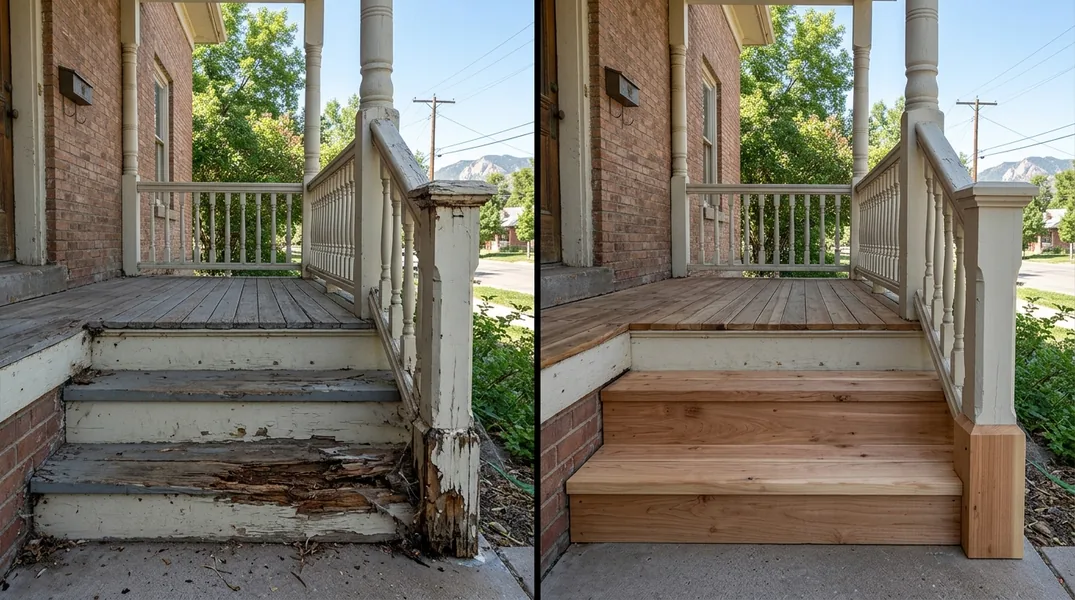
Why Historic Homes in Fort Collins Demand Different Maintenance
Owning a Victorian or bungalow in Fort Collins is a privilege that comes with real responsibility. These charming properties, many built in the early 1900s, have survived over a century of Colorado weather, foundation shifts, and seasonal moisture changes. But that longevity doesn't mean they're maintenance-free. In fact, the opposite is true.
Historic homes have unique vulnerabilities that newer construction simply doesn't face. The original materials, construction methods, and design details that make these homes beautiful also make them more susceptible to wood damage. Unlike modern homes built with pressure-treated lumber and synthetic barriers, your Old Town Victorian or Laurel School bungalow likely features solid wood framing, natural wood siding, and minimal moisture protection. When water finds its way into these materials, the damage can spread quickly and silently.
The good news is that understanding these vulnerabilities puts you ahead of most homeowners. With the right knowledge and proactive maintenance, you can protect your investment for decades to come.
Wood Siding Repair: The First Line of Defense
Your home's exterior wood siding is the barrier between your historic structure and the elements. In Fort Collins, where we experience dramatic temperature swings, intense UV exposure, and occasional heavy moisture, this barrier faces constant stress. Paint peels, wood grain expands and contracts, and small cracks develop. These aren't just cosmetic issues; they're invitations for water infiltration.
Many homeowners assume that Wood Rot & Dry Rot Repair only becomes necessary when damage is visible. In reality, the most destructive wood rot often starts behind the paint and siding, where you can't see it. A small gap where two boards meet, a failed caulk joint, or a missing piece of trim can allow moisture to penetrate the wood's surface and begin the decay process. By the time soft spots appear or paint bubbles, the problem has already established itself deep within the structure.
Regular inspection of your wood siding is essential. Look for areas where paint is cracked or peeling, where siding boards are warped or cupped, or where caulk has failed. Pay special attention to areas around windows, doors, and where different siding materials meet. These transition zones are where water loves to hide.
Understanding Dry Rot vs. Wet Rot: What's Destroying Your Home
The terms dry rot and wet rot are often used interchangeably by homeowners, but they represent different problems requiring different solutions. Understanding the distinction can help you identify issues early and communicate more effectively with repair professionals.
Dry rot, despite its name, requires moisture to develop. The difference is that dry rot fungi can thrive in wood with relatively low moisture content, around 20 percent. Once the fungus establishes itself, it can actually spread to drier wood nearby, which makes it particularly dangerous in historic homes where moisture control is inconsistent. Dry rot creates a distinctive cubical cracking pattern as it progresses, and the wood becomes brittle and crumbly. In Victorian and bungalow homes, dry rot often attacks the structural wood members that hold your house up, making it a serious structural threat.
Wet rot, on the other hand, requires consistently high moisture levels to develop and spread. It's generally less aggressive than dry rot and tends to stay localized to the wet area. However, wet rot is often a sign of a moisture problem that needs addressing. If you're finding wet rot in your historic home, you likely have a leak or drainage issue that's allowing water to accumulate in the wood.
Both types of rot can compromise the structural integrity of your home. If you suspect either condition, it's time to reach out for a free estimate from a qualified carpenter who understands historic home construction.
Foundation and Structural Concerns in Older Homes
Many historic homes in Fort Collins were built on stone or rubble foundations without modern moisture barriers. This means your home's wooden sill plates and lower framing members are in constant contact with moisture rising from the ground. Over decades, this exposure creates the perfect environment for wood rot to establish itself at the very base of your home's structure.
If the wood supporting your home begins to decay, the consequences can be severe. Sagging floors, cracked plaster, doors that no longer close properly, and visible settling are all signs that your home's structural wood may be compromised. This is where Floor Joist & Subfloor Repair becomes critical. Damaged floor joists can affect the entire structural system, and repairs require careful planning to ensure proper support during the work.
In some cases, more extensive structural interventions become necessary. Beam Replacement & Load-Bearing Wall Removal projects require engineering expertise and careful execution, but they're sometimes the only way to restore structural integrity to a compromised historic home. These are not do-it-yourself projects. Working with experienced professionals who understand both the structural requirements and the historic preservation principles of your home is essential.
Preventive Maintenance: Your Best Investment
The most cost-effective approach to protecting your historic home is prevention. Regular maintenance catches small problems before they become expensive disasters. Start by establishing a seasonal inspection routine. In spring, check your roof and gutters for debris and damage. Summer is ideal for inspecting exterior wood and paint condition. Fall, before winter moisture arrives, is the time to ensure your drainage systems are clear and functioning properly. Winter inspections should focus on any signs of ice damming or interior moisture problems.
Keep your gutters clean and ensure downspouts direct water at least four feet away from your foundation. Maintain proper grading around your home so water slopes away from the structure. Inspect and maintain caulking around windows, doors, and siding joints. Touch up paint and stain on exterior wood regularly. These simple tasks, performed consistently, can add decades to the life of your home's wood components and prevent the conditions that lead to rot.
If you notice any signs of moisture problems, wood damage, or structural issues, don't wait. Early intervention is always more affordable and less disruptive than dealing with advanced deterioration. Contact Fort Collins Carpentry at (970) 818-5680 to discuss your home's specific needs and get a free estimate for any repairs you're considering.
When to Call a Professional: Signs Your Historic Home Needs Help
Some maintenance tasks are appropriate for homeowners to handle, but structural and extensive wood damage require professional expertise. Knowing when to call in the experts can mean the difference between a successful repair and a project that creates more problems than it solves.
You should contact a professional carpenter if you notice soft or spongy wood anywhere in your home's structure, visible fungal growth or mushroom-like fruiting bodies on wood, a musty odor in your basement or crawlspace, paint that's bubbling or peeling extensively, visible gaps between siding boards or where wood meets masonry, doors or windows that are sticking or no longer closing properly, or floors that are sagging or bouncing. These are all signs that your home's wood is compromised and needs professional evaluation.
Fort Collins Carpentry specializes in historic home repair and understands the unique challenges that Victorian and bungalow properties present. Our team knows how to work with original materials, how to match historic details, and how to repair structural damage while respecting your home's character. Whether you need a simple siding repair or comprehensive structural assessment, we're here to help. Call us at (970) 818-5680 or visit our website to schedule your consultation today.
Looking for a professional carpentry contractor in Fort Collins? Fort Collins Carpentry responds fast for all your carpentry needs.
Get a Free QuoteOur services: Wood Rot & Dry Rot Repair · Termite Damage Repair · Floor Joist & Subfloor Repair