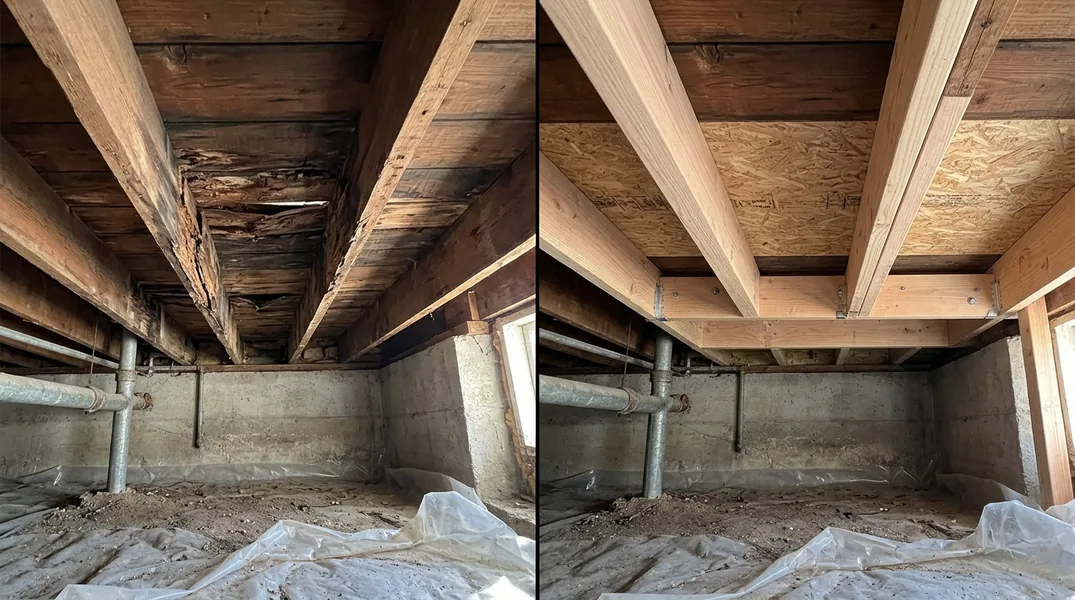
Why Fort Collins Homes Develop Sloping Floors
If you've noticed your Fort Collins home's floors sloping toward the center or one corner, you're not alone. Sloping floors are one of the most common structural concerns we see in Northern Colorado basements and crawl spaces. The culprit is rarely a single factor; instead, it's usually a combination of soil movement, moisture infiltration, and aging wood framing.
The primary cause of floor sag in our region is expansive soil. Colorado's clay-rich soil expands when wet and contracts when dry, creating enormous upward pressure on foundations and basement walls. This cyclical movement can push foundation walls inward, warp rim joists, and eventually cause the floor system to settle unevenly. Over time, what starts as a barely noticeable slope becomes a safety hazard and a sign that structural damage is progressing.
Understanding Expansive Soil in Colorado
Expansive soil is particularly problematic in Northern Colorado because our clay-heavy terrain absorbs and releases moisture seasonally. When spring snowmelt or heavy rain saturates the soil around your foundation, the clay expands upward with surprising force, sometimes exerting pressures exceeding 10,000 pounds per square foot. In dry summers, that same soil shrinks, creating voids and allowing the foundation to settle. This push-and-pull cycle is relentless and damages wood framing, concrete foundations, and the floor joists that support your home's structural integrity.
The problem is compounded when gutters are clogged, grading slopes toward the house, or basement moisture isn't properly managed. Homeowners who don't address drainage issues often find that expansive soil damage accelerates. If you suspect expansive soil is affecting your home, it's essential to have a professional inspection. The good news is that understanding the root cause is the first step toward a real, lasting fix.
How Damaged Floor Joists Lead to Sagging
Floor joists are the horizontal wooden beams that support your home's floors. In basements and crawl spaces, they span between the foundation walls or support posts. When joists become compromised by moisture, wood rot, or the pressure from expansive soil, they lose their load-bearing capacity. A single weakened joist might sag a quarter-inch, but when multiple joists fail, the entire floor system can slope noticeably, creating that spongy, uneven feeling underfoot.
Floor Joist & Subfloor Repair is one of the most important investments a homeowner can make. Damaged joists don't repair themselves; they worsen over time. Wood rot, which often accompanies moisture problems in basements, eats away at the wood fibers and weakens the beam. Termites and other wood-destroying insects can also hollow out joists from the inside, making them structurally unsound even though they may look intact from above.
Sistering Floor Joists: A Proven Solution
Sistering floor joists is one of the most effective repairs for sagging floors caused by damaged or undersized joists. The process involves installing a new, pressure-treated or solid wood beam alongside the damaged joist, fastening the two together with bolts and structural fasteners. This creates a composite beam that distributes the load across both pieces, restoring the floor's level and structural integrity. When done correctly, sistering can eliminate sag and prevent future settlement.
The key to successful sistering is proper assessment and installation. Not every sagging floor needs sistering; some require beam replacement, foundation repair, or a combination of fixes. Our team evaluates each situation carefully, considering the extent of damage, the cause of the sag, and the home's overall structural needs. We use modern fastening techniques and pressure-treated lumber rated for basement environments to ensure your repair lasts decades. If you're seeing floor sag in your home, a professional structural evaluation is the first step toward determining whether sistering or another repair method is right for you.
Diagnosing the Root Cause: Moisture, Rot, and Settlement
Before recommending any repair, we investigate why the floor is sagging in the first place. Is it moisture intrusion? Expansive soil movement? Wood rot from a plumbing leak? Undersized joists that were never adequate for the load? The answer determines the scope and cost of the repair. A floor sagging due to expansive soil alone may require foundation stabilization and drainage work. A floor sagging because of Wood Rot & Dry Rot Repair needs both joist replacement and moisture control to prevent recurrence.
This is why we always recommend a thorough basement inspection. Our team looks for active water intrusion, checks soil conditions around the foundation, inspects joists for rot and insect damage, and tests the structural integrity of support beams. We document findings with photos and measurements, so you understand exactly what's happening beneath your floors. Armed with this knowledge, you can make an informed decision about repairs and prioritize work based on safety and long-term value.
Floor Joist & Subfloor Repair Cost in Fort Collins: What to Budget
The cost of floor joist repair varies widely depending on the extent of damage, the number of joists involved, and whether additional work like moisture control or foundation repair is needed. A single sistered joist might cost between $800 and $1,500, while repairing multiple joists or replacing severely rotted sections can range from $3,000 to $10,000 or more. Beam replacement and Beam Replacement & Load-Bearing Wall Removal work typically costs more because it requires temporary support systems and precise engineering.
The best way to understand your repair pricing is to request a free estimate from Fort Collins Carpentry. We'll inspect your basement, identify all structural issues, and provide a detailed quote that breaks down labor, materials, and any additional work needed to prevent future damage. Many homeowners are surprised to learn that investing in proper repair now prevents far costlier problems down the road, including foundation damage, mold growth, and even structural failure. Don't delay if you suspect floor sag; the sooner we address it, the better the outcome and the lower your overall cost.
When to Call a Professional for Sagging Floor Repair
If you notice floors that slope, feel spongy, or creak excessively, it's time to call in a professional. Sagging floors are not cosmetic issues; they're red flags indicating structural problems that worsen over time. Some homeowners try temporary fixes like shimming or adding support posts without addressing the underlying cause. These band-aids might mask the problem briefly, but they don't stop the damage. Only a comprehensive repair that addresses moisture, soil movement, and damaged wood components will truly resolve the issue.
Fort Collins Carpentry has been helping homeowners across Northern Colorado tackle foundation and structural problems for years. We combine expert diagnosis with proven repair techniques to restore your home's safety and value. If you're concerned about sloping floors, expansive soil damage, or the condition of your basement structure, contact us at (970) 818-5680 or request a free estimate online. We'll give you honest answers about what's happening in your home and the best path forward.
Looking for a professional carpentry contractor in Fort Collins? Fort Collins Carpentry responds fast for all your carpentry needs.
Get a Free QuoteOur services: Wood Rot & Dry Rot Repair · Termite Damage Repair · Floor Joist & Subfloor Repair