The Fort Collins Door Problem: More Than Just House Settling
If you own a home in Fort Collins, you've probably noticed it: a door that used to close smoothly now sticks halfway, or it binds at the top corner. Many homeowners assume their house is settling unevenly, and while foundation movement does happen, the real culprit behind sticking doors in our region is often more complex and more fixable than you might think.
The Front Range of Colorado sits atop some of the most expansive soil in the country. Expansive soil, also called clay soil, swells when it absorbs moisture and shrinks when it dries out. This constant cycle of expansion and contraction puts pressure on your home's frame, foundation, and door frames in ways that a simple house settling narrative doesn't capture. Add to that our notoriously dry Colorado air and seasonal humidity swings, and you have a perfect storm for doors that won't close properly. Understanding what's really happening is the first step toward a lasting solution.
Expansive Soil and Door Frames: The Science Behind the Stick
Expansive soil behaves differently from standard soil because of its clay content. When moisture enters the soil (from spring snowmelt, irrigation, or heavy rain), the clay particles absorb water and expand, sometimes increasing in volume by 10 percent or more. This upward and lateral pressure pushes against your foundation, basement walls, and the wooden framing members that support your doors. The door frame, which sits in the wall opening, gets squeezed slightly out of square. What was once a perfectly rectangular opening becomes a trapezoid or parallelogram, and suddenly your door binds.
The problem worsens during Colorado's dry season. As the soil loses moisture in late summer and fall, it contracts, and the pressure releases. Your door frame shifts back, but rarely to its original position. Over multiple cycles of expansion and contraction, the cumulative effect adds up. The frame warps permanently, the hinges don't hang true, and the door no longer seats properly in its opening. This is why sticking doors are so common in Fort Collins and throughout northern Colorado, regardless of a home's age.
Dry Air, Humidity Swings, and Wood Movement
Beyond soil expansion, Colorado's climate plays a starring role in door problems. Our average annual humidity hovers between 40 and 50 percent, far lower than most of the United States. Wood naturally absorbs and releases moisture in response to its environment. When humidity is low, wood shrinks. When humidity rises (even temporarily), wood swells. A wooden door and its wooden frame respond to these changes at slightly different rates, creating friction and binding.
Winter in Fort Collins is especially harsh on wood. Indoor heating systems dry out the air inside your home to 20 or 30 percent humidity, while outdoor humidity may be even lower. Your door frame, which is built into the wall and exposed to both interior and exterior air, experiences conflicting moisture pressures. The interior side of the frame dries faster than the exterior side, causing the frame to cup or twist slightly. Meanwhile, the door itself may be responding to different conditions, leading to misalignment. Come spring, when humidity rises and then drops again, the cycle repeats, and your door sticks a little more each year.
How to Diagnose a Sticking Door in Your Home
Before you assume your entire foundation is failing, take a few minutes to diagnose exactly what's happening with your sticking door. Close the door slowly and pay attention to where it binds. Does it catch at the top, bottom, or side? Does it bind only when the weather changes? Does it stick worse in winter or summer? These clues tell a story about whether soil movement, wood shrinkage, or frame warping is the primary cause.
A simple visual inspection can reveal a lot. Look at the gap between the door and the frame on all four sides. In a properly hung door, this gap should be consistent, usually about 1/8 inch. If the gap is wider at the top than the bottom, or vice versa, the frame is out of square. You can also place a level against the door frame to see if it's truly vertical. If the frame leans even slightly, that's a sign of foundation or soil movement pushing on the wall. If the door itself is warped (you'll see a bow when you look at it edge-on), that's a wood moisture issue. Most sticking doors involve a combination of these factors, which is why a professional inspection is often the best first step.
Wood Rot and Moisture Damage: When Sticking Doors Signal Bigger Problems
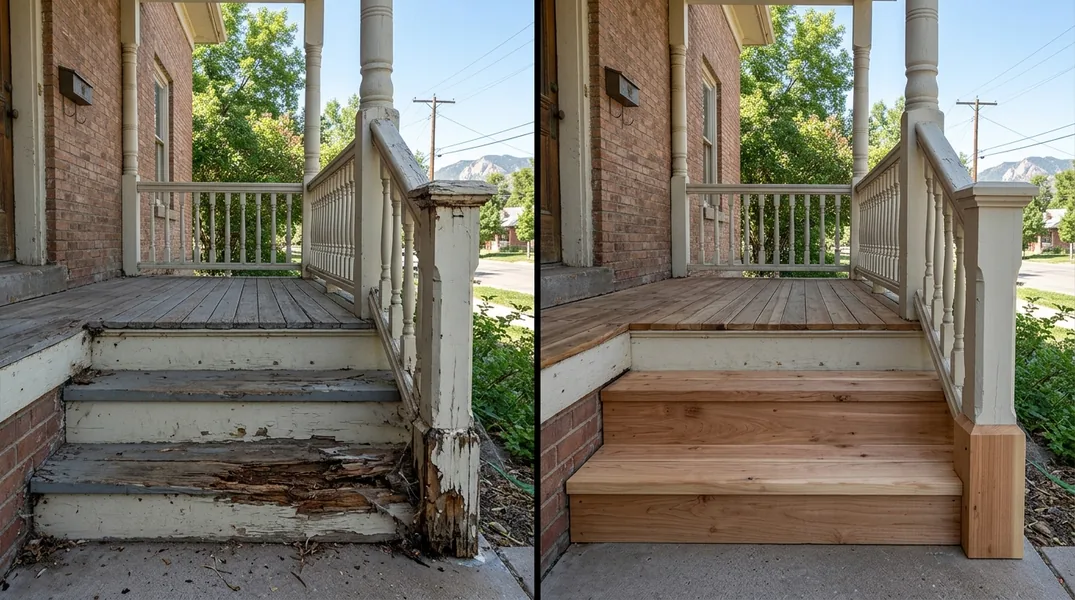
Here's where sticking doors become more than just an annoyance: they often signal moisture problems that can lead to wood rot. If your door frame is binding because of soil expansion and foundation movement, water is likely finding its way into the wall cavity or the frame itself. Wet wood is vulnerable to rot, especially in Colorado's climate where the freeze-thaw cycle accelerates decay. A door that sticks may be your home's early warning system that Wood Rot and Dry Rot Repair is needed.
Dry rot is particularly insidious because it thrives in low-moisture environments, which sounds contradictory but isn't. Dry rot fungus needs just enough moisture to survive and can spread through wood even when the surface feels dry to the touch. If your door frame has been exposed to repeated wetting and drying cycles due to expansive soil movement or poor drainage, dry rot may already be present. A professional carpenter can inspect the frame, check for soft spots or fungal growth, and recommend repairs before the problem spreads to structural members like floor joists or beams. Don't ignore a sticking door: it could be telling you that your home needs attention.
Professional Door Repair and Prevention in Fort Collins
Fixing a sticking door isn't always as simple as planing the edge or adjusting the hinges. If the problem stems from expansive soil or foundation movement, surface-level repairs will only buy you time. A professional carpenter will assess whether the frame itself is damaged or just out of square, whether the door needs replacement, and whether the underlying cause (soil movement, drainage issues, or wood damage) needs to be addressed to prevent the problem from recurring.
Common professional repairs include shimming the frame to bring it back into square, replacing a warped door, installing a new frame if the existing one is damaged, or addressing drainage and moisture issues around the foundation. In some cases, if Wood Rot and Dry Rot Repair is needed, a carpenter may need to replace sections of the frame or adjacent wall framing. The good news is that most door problems are fixable without major structural work, especially if caught early. Fort Collins Carpentry has helped hundreds of homeowners resolve sticking doors by identifying the root cause and implementing a lasting solution. If you're tired of doors that won't close properly, we encourage you to reach out for a free estimate or call us at (970) 818-5680 to discuss your specific situation.
Preventing Sticking Doors: Maintenance and Moisture Control
While you can't control Colorado's climate or the expansive soil beneath your home, you can take steps to minimize the impact on your doors and frames. Proper drainage around your foundation is crucial. Make sure gutters and downspouts direct water away from the house, and ensure the ground slopes away from the foundation. If water pools near your home after rain, that moisture is feeding the expansive soil and making it swell. Addressing drainage issues now can prevent years of door problems and more serious structural issues later.
Inside your home, maintaining consistent humidity helps minimize wood movement. Using a humidifier in winter can help keep indoor humidity in the 40 to 50 percent range, which reduces the stress on wooden door frames and doors. Avoid letting doors or windows stay open for extended periods during dry seasons, as this allows interior humidity to drop dangerously low. If you notice a door starting to stick, address it promptly rather than waiting for the problem to worsen. Sometimes a simple adjustment is all that's needed, but early intervention can prevent the need for frame replacement or more extensive repairs down the road. If you're concerned about sticking doors or suspect moisture damage, Fort Collins Carpentry is here to help. Contact us today for expert advice and professional repairs.
Looking for a professional carpentry contractor in Fort Collins? Fort Collins Carpentry responds fast for all your carpentry needs.
Get a Free QuoteOur services: Wood Rot & Dry Rot Repair · Termite Damage Repair · Floor Joist & Subfloor Repair